
Technology
The Instruments We Use to Measure the Invisible
ANU-X develops the sensors, software, and system architecture that make it possible, for the first time, to detect dark matter directly and reproducibly — beyond the limits of today’s detectors.

01 — Detection Systems
Sensor Arrays at the Edge of the Measurable
At the heart of our work are ultra-sensitive sensor arrays designed to detect extremely rare interactions — the fleeting signals produced when dark matter interacts with ordinary matter. We combine cryogenic detector technologies with custom-built readout electronics to achieve noise levels far below what commercially available systems can offer. Every array is fabricated, calibrated, and shielded against cosmic interference in cleanroom environments before deployment in underground test facilities. The result is a detection architecture that is not only more sensitive than the current state of the art, but also scalable — from laboratory setup to large-scale observatory.

02 — Quantum Metrology
Precision at the Quantum Level
Classical measurement methods reach their limits where signals fall within the range of individual quantum excitations. That’s why ANU-X relies on quantum sensing: superconducting qubit detectors, squeezed light for noise suppression, and single-photon counters that operate far below the classical shot-noise limit. These technologies allow us to resolve energy depositions in the milli-electronvolt range — a precision that, just a few years ago, was considered physically unattainable. Our quantum measurement platforms are developed in close collaboration with fundamental research, but consistently engineered for industrial reproducibility and long-term stability.
03 — Gravitational Analytics
Maps of the Invisible Mass
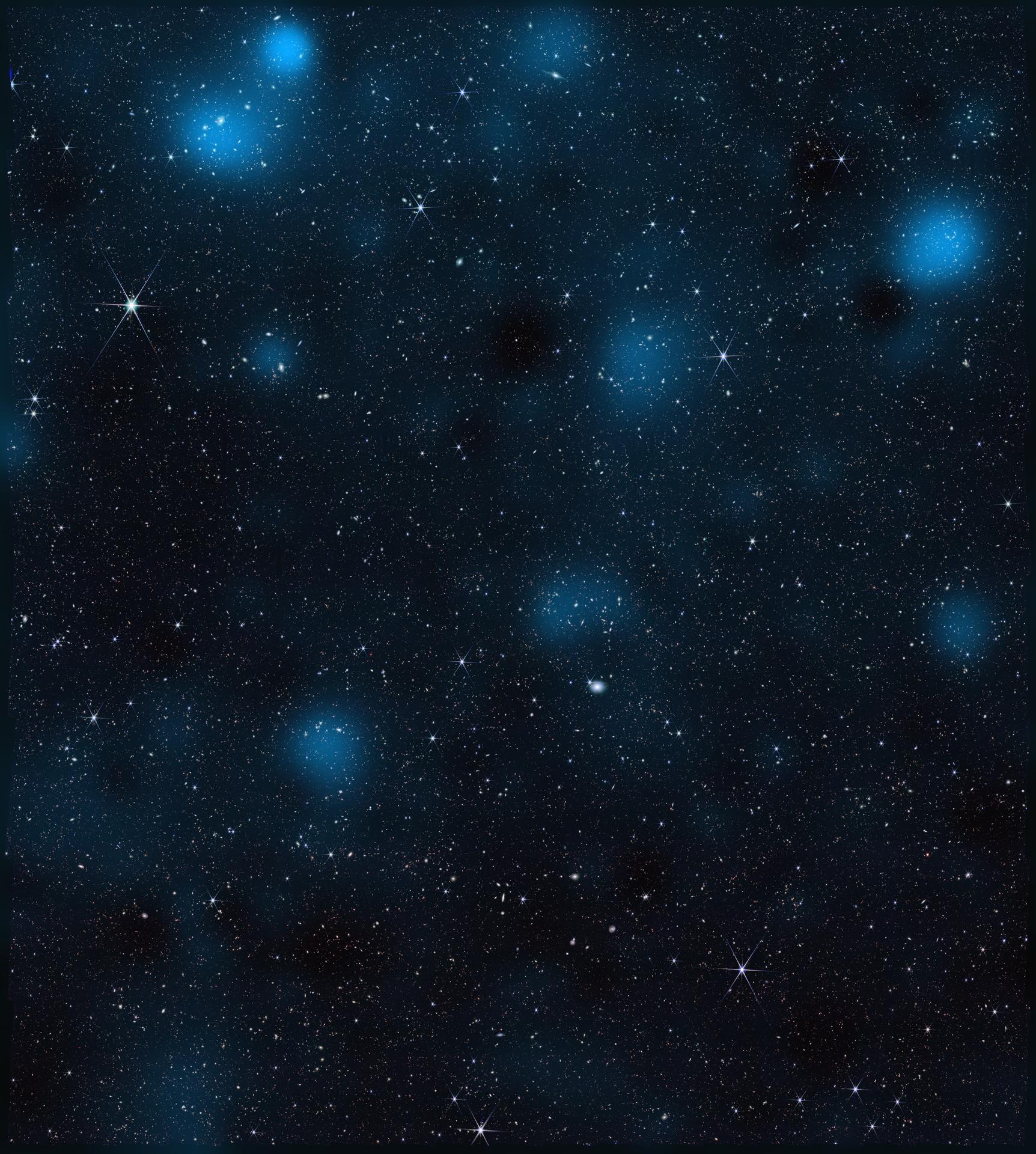
Dark matter reveals itself not only through rare particle interactions, but also through its gravitational effect on visible matter and light. Our gravitational analytics platform processes large-scale sky surveys and gravitational lensing effects to produce mass maps of unprecedented resolution. By fusing telescope data, custom-built reconstruction algorithms, and machine learning, we identify anomalies in mass distribution that point to concentrations of dark matter. This analytics layer adds a cosmological perspective to our detector labs — and delivers the target coordinates for the next generation of underground experiments.
We don’t build instruments to confirm the laws of nature. We build instruments to find out where they end.
ANU-X Engineering Philosophy
Our engineers come from aerospace, semiconductor manufacturing, and institutional fundamental research. This combination is deliberate: industrial manufacturing discipline meets the uncompromising rigor of fundamental physics. Every system ANU-X builds must meet two standards — scientifically unimpeachable and reliable in the field.
Ready to Work at the Frontier of Physics?
Whether as a partner, investor, or future team member — we’re looking to connect with anyone who wants to help make the invisible visible.